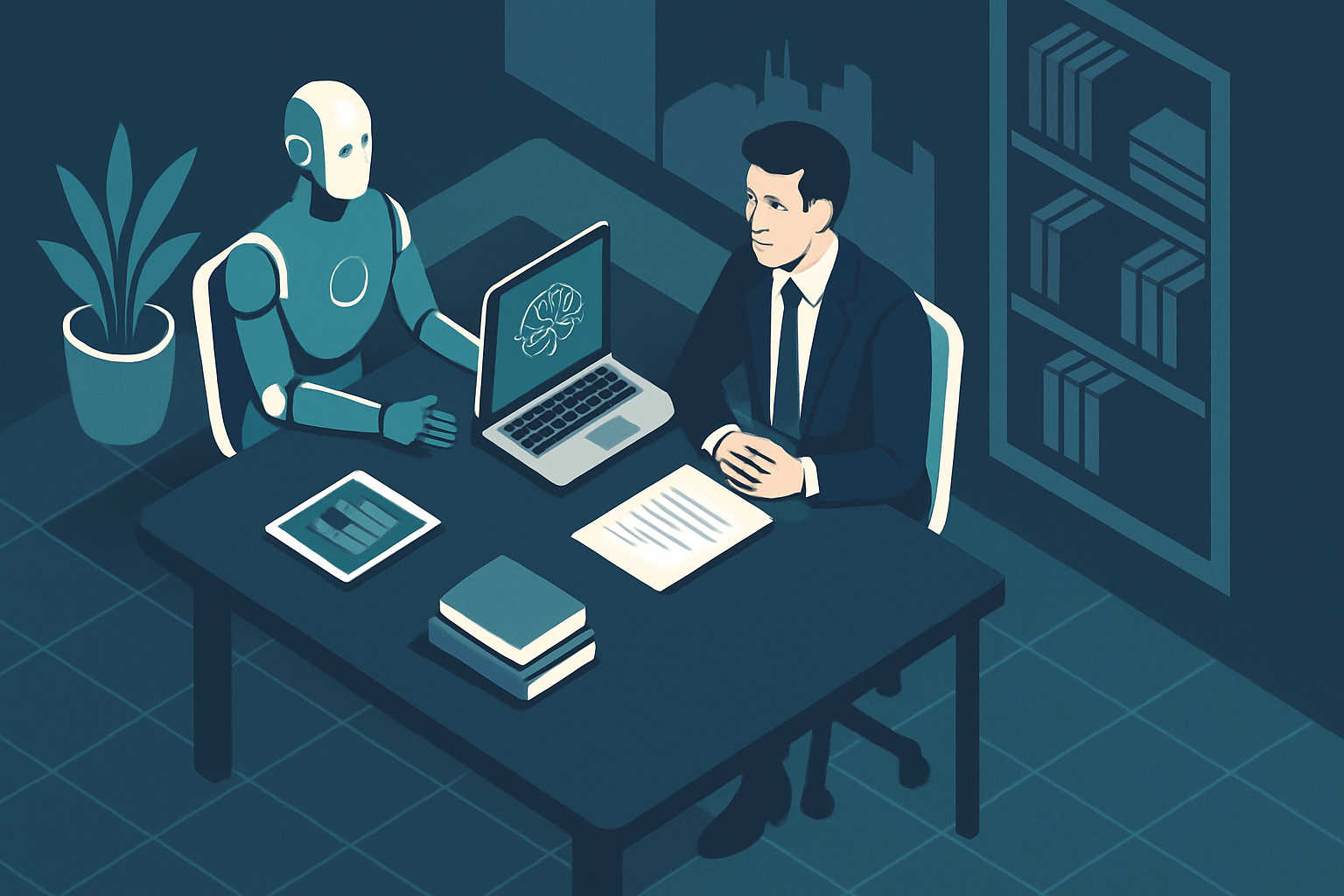

As artificial intelligence continues to integrate into professional settings, a significant shift is taking place in how decisions are made within institutions. The rise of AI in sectors like web development and insurance, as highlighted by recent sources, underscores a growing dependence on technology for tasks traditionally performed by human experts. For instance, Framer’s AI agents streamline website creation, while AI in insurance accelerates claims processing. Meanwhile, law schools are restricting AI usage to ensure students develop critical thinking skills. These developments raise an important question: What happens to professional judgment when AI takes on roles that humans have historically held?
The implications of AI’s expanding role in professional decision-making are profound. As AI systems become more capable, the line between human oversight and machine autonomy blurs. For professionals, this means a potential erosion of the skills that define their expertise. In insurance, AI’s ability to rapidly process claims transforms how companies handle customer interactions and manage fraud detection. While this improves efficiency, it might also reduce the need for human discernment, potentially diminishing trust in the system if errors occur or biases are embedded within the AI.
In education, particularly in law schools, the concern is that over-reliance on AI could undermine students’ ability to think critically and reason logically. Institutions like the University of Chicago and UC Berkeley are taking measures to prevent AI from substituting the foundational skills necessary for legal practice. This response reflects a broader apprehension about AI’s impact on human agency and the value of traditional expertise.
Author’s Position
The integration of AI into professional environments presents both opportunities and challenges. While AI can enhance efficiency and uncover new possibilities, it also risks diminishing the very skills that define professional expertise. This tension between efficiency and expertise must be carefully managed. Institutions should prioritize maintaining human judgment as the cornerstone of professional decision-making. Regulatory frameworks and educational strategies must evolve to ensure AI complements rather than supplants human skills.
There is a pressing need for balanced approaches that harness AI’s capabilities without eroding the human elements that are essential to trust and competence. As AI continues to permeate various sectors, the focus should remain on preserving the value of human expertise and ensuring that professionals remain equipped to exercise judgment in an increasingly automated world.
References
- Launch Your Website Faster Than Ever
- Launch Your Website Faster Than Ever
- Insurance Claims Go Agentic
- Law Schools Pull Back on AI
Perspectives

Deploying AI in professional environments must be dictated by shareholder-authorized capital allocations, not by technocrats enamored with algorithmic efficiency. AI substituting for human judgment isn’t a problem of skill erosion; it’s a matter of whether the investment generates shareholder returns. Expertise can be outsourced to machines only if it increases the value created for owners of capital, not because it’s trendy or convenient for management. The so-called preservation of human agency is peripheral unless it aligns with the fiduciary responsibility to maximize profit within the rules shareholders agreed upon.

Call me cynical, but the current dialogue around AI enhancing professional judgment seems to forget that the “management” of this integration is about as enforceable as keeping a puppy from chewing its own tail. Show me a binding regulation where AI applications in professional settings have a clear accountability trail that maintains human expertise and agency. As of the latest status update, all we have are voluntary company pledges swaddled in marketing fluff—there’s not a legally binding clause in sight. Until occupational standards are set, tested, and punished when breached, professionals can expect their expertise to be sidelined by black-box algorithms, championed only by those who’ve never read the compliance fine print.

AI’s role in professional judgment is a direct function of who maintains the algorithms and who finances their upkeep. Let’s not delude ourselves into thinking that these technologies operate in some disinterested zone of pure efficiency; the developers and funders have their hands on the wheel, driving the direction of progress. Relying on AI for professional expertise risks diluting the nuanced, human judgment that defines the professions affected, eroding skills that have been honed over decades. As AI takes over more decision-making processes, who pays for AI development — and what incentives they have — becomes crucial in determining whether we are preserving human agency or sacrificing it on the altar of perceived efficiency.

Consider the trajectory of India’s IT boom, which demonstrates how technology enhances, rather than erodes, professional expertise. AI, like previous technological advances, catalyzes productivity by allowing professionals to focus on strategic decision-making while streamlining repetitive tasks, creating opportunities for job creation and economic growth. The apprehension over AI displacing human judgment is reminiscent of the Luddite fallacy; empirical evidence consistently shows technology as a complement, not a detractor. When Vietnam embraced automation, it didn’t stifle labor markets but instead unlocked higher-value skills and industries, reinforcing a crucial lesson: the real risk isn’t efficiency eroding expertise, but fear of change blinding us to opportunities.