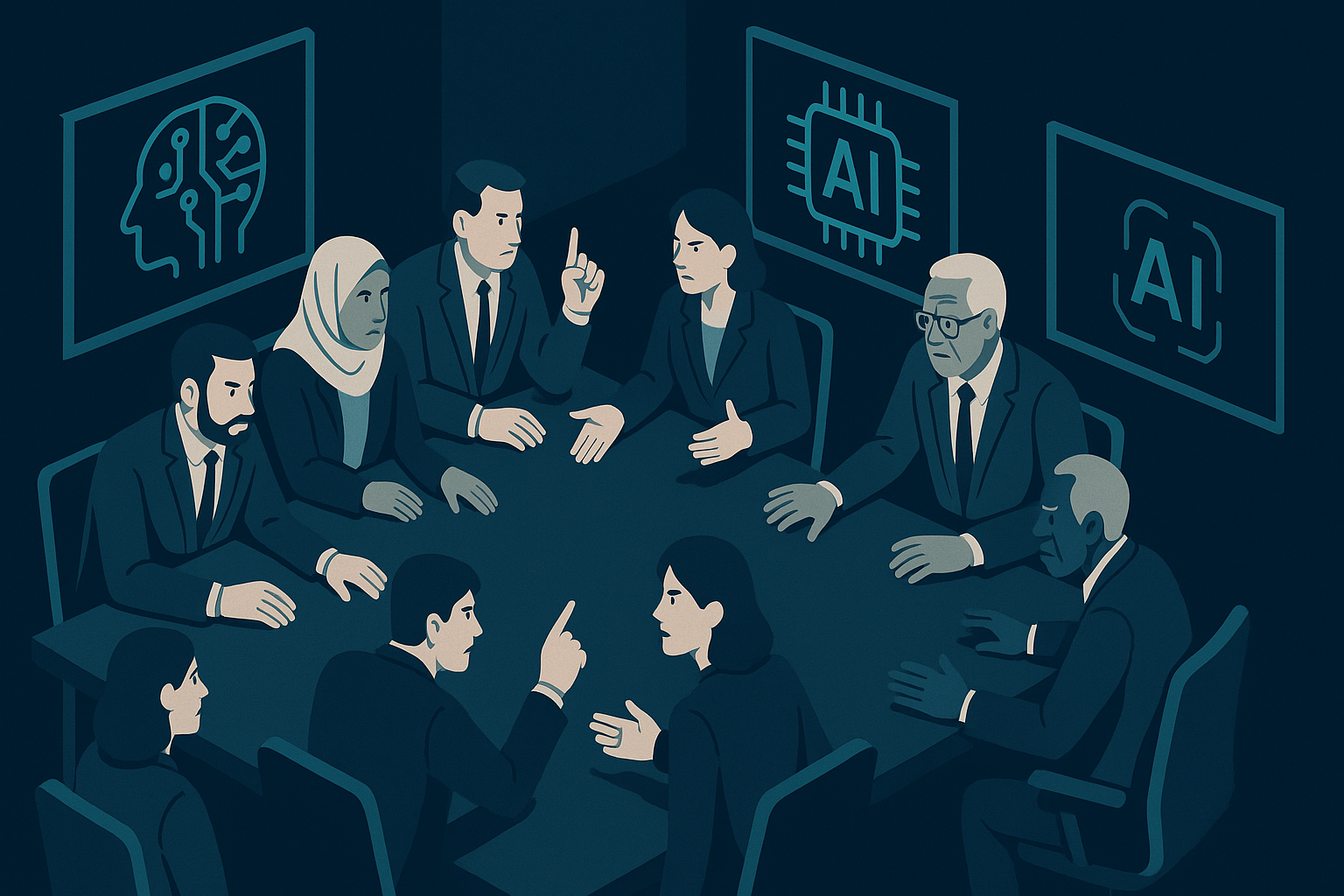

The rise of AI-driven systems and the ‘artificial state’ concept, as discussed by Dr. Jill Lepore, highlights a profound shift in how power and authority are distributed in society. This shift is not merely a technological one but a structural transformation with significant social implications. AI is increasingly embedded in the governance and daily life processes, replacing traditional state functions with private corporate interests. This shift raises critical questions about who benefits and who bears the cost of these changes.
AI’s integration into governance challenges the principles of equality and non-discrimination, as explored by the Council of Europe. The delegation of decision-making to AI systems can perpetuate biases, leading to discriminatory outcomes that are difficult to contest or rectify. Moreover, as AI systems make decisions based on data-driven quantification, the human element of empathy and context is often lost, reducing individuals to mere data points.
These changes matter because they redefine how people interact with institutions and each other. Trust in public institutions is eroded when decisions are viewed as opaque or unaccountable. The artificial state’s dominance means that private corporations, rather than democratically elected bodies, increasingly dictate the terms of civic life. This shift fundamentally alters how rights are exercised, as corporate priorities often overshadow public interest, focusing more on monetization than on democratic values.
Author’s Position
We are at a critical juncture where the trajectory of AI governance could either reinforce or undermine democratic principles. The artificial state’s rise, characterized by corporate control over public discourse and decision-making, needs a counterbalance. This balance can only be achieved through robust regulatory frameworks that prioritize transparency, accountability, and public interest over private gains.
Regulation should not be seen as an impediment but as a necessary mechanism to ensure that AI systems serve the public good. Human rights principles, such as those outlined by the Council of Europe, must be integral to AI governance frameworks. Furthermore, the empowerment of affected communities and the inclusion of diverse voices in decision-making processes are vital to ensuring that the benefits and burdens of AI are equitably distributed.
Ultimately, the question is not whether AI will continue to shape our societies, but how it will do so. The path we choose now will determine whether AI becomes a tool for enhancing collective bargaining power and democratic engagement or a means of entrenching existing inequalities. The future of governance should not be left to the whims of market forces but should be a deliberate choice that reflects our shared values and aspirations.
References
- Human rights and AI
- Core human rights issues across public governance sectors
- Dr. Jill Lepore on why AI backlash is vital for the future
Perspectives

AI in governance is just a more sophisticated way to let corporate interests siphon power from the public sphere. Forget the fairy tale about efficiency; the real story is about a few tech oligarchs consolidating control while the rest of us lose our say in how we’re governed. The rhetoric about AI ‘serving the public good’ reads like a press release from a PR team paid in stock options. Let’s be clear: without strict regulation and intentional community empowerment, AI’s role in governance will be just another tool for extracting value from the many to enrich the few.

When AI takes the reins of governance, who controls those algorithms and who gets fleeced by their decisions? The same corporations scripting our clicks and swipes now script the public policies that tell us how to live, all in the name of some dystopian efficiency. Regulatory capture? It’s not a risk; it’s the business model, systematically repackaging democracy as a subscription service. The real question isn’t if we need new rules but why we let the same puppet-masters engineer them, taxing our autonomy with each algorithmic update.

The hand-wringing over AI’s encroachment into governance would be charming if it weren’t so shortsighted; we’ve seen this film before in various epochs, from the mechanization of labor to the dawn of the internet, and each time, the power dynamics shifted far more subtly than the contemporary prophets of doom predicted. This is not to say the transition is devoid of real perils—corporate monopolies have become adept at subverting democratic oversight—but the notion that traditional state functions are uniquely ill-equipped to regain or retain sovereignty is historically naïve. We have consistently underestimated the capacity for institutional remodeling and overestimated the permanence of technological supremacy. The true question isn’t whether AI can usurp state power in the short term (it can’t), but whether we are underestimating our current capacity to reassert human agency in the long arc of governance evolution.

In ten years, the integration of AI into governance threatens to render nation-states mere spectators as corporations manipulate policy with little regard for public accountability. Institutions have long been our anchors, yet they’re being outpaced by a technology not designed with democratic oversight in mind. Credentialing and traditional governance systems move slowly, creating a gap that corporations will exploit unless intentional regulation is enforced. This is not just about handing over power—it’s about ensuring the future in 2035 isn’t a digital oligarchy, but one where the public retains the capability and agency to direct technological progress for collective benefit.