
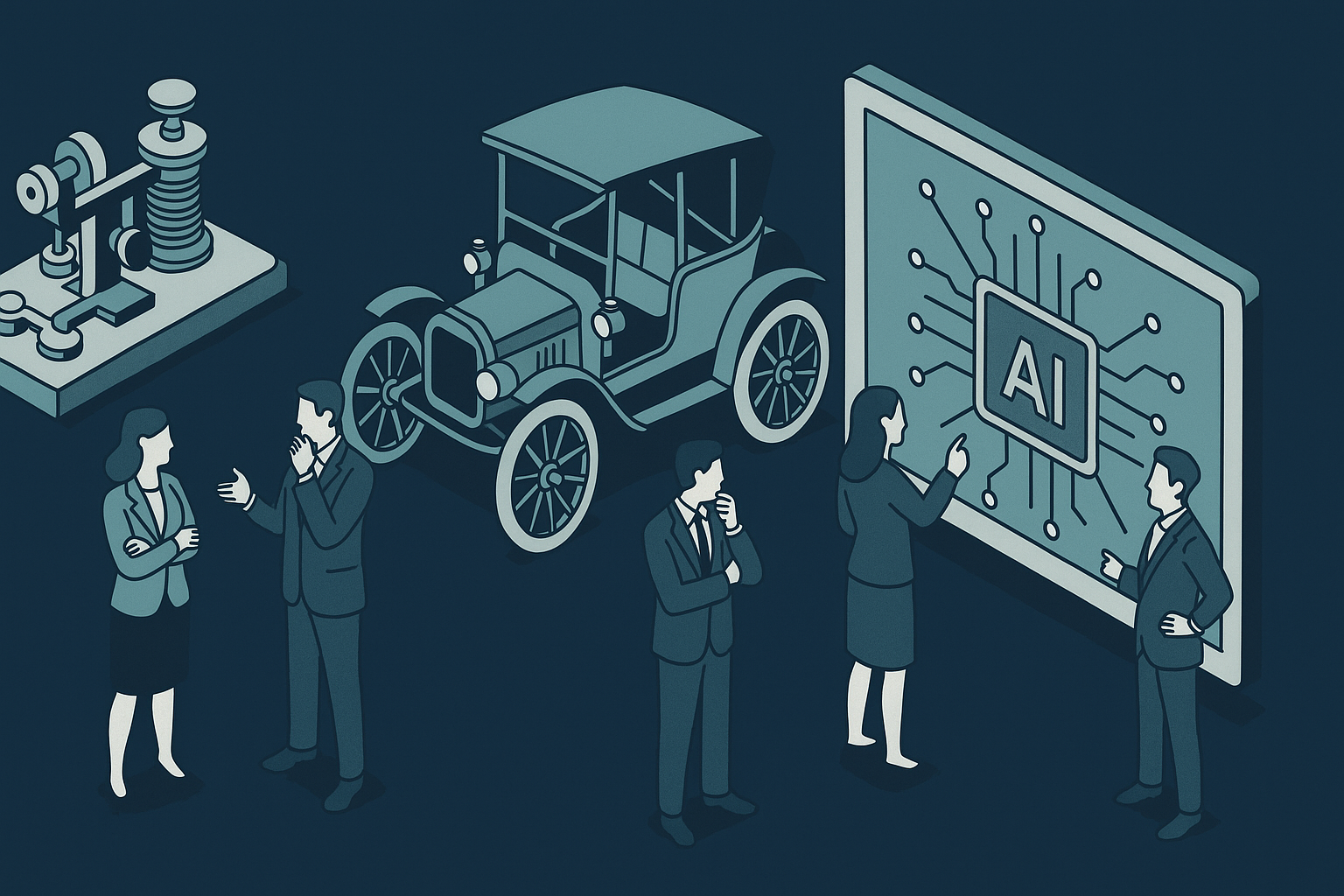

The rapid evolution of artificial intelligence (AI) has sparked debates about its potential to transform decision-making processes across various sectors. As organizations adopt AI-driven tools to enhance productivity, the question looms: what values and agency are being embedded within these systems, and how do they compare to historical technological shifts?
To understand the current moment, we can look back at three significant technological transitions: the introduction of the telegraph, the rise of the automobile, and the advent of the internet. Each of these innovations altered how people communicated, traveled, and accessed information — but they also brought with them challenges that remain relevant today.
The Telegraph: Speed vs. Control
The telegraph, introduced in the 19th century, revolutionized communication, allowing messages to be transmitted over long distances almost instantaneously. This shift had profound implications for commerce, politics, and social interactions. However, the rapid dissemination of information led to issues of control and credibility. Who had access to the telegraph? Who could send messages and shape narratives? As with AI today, the technology was not neutral; it embedded the power dynamics of its time.
“The telegraph did not merely transmit messages; it transformed the very fabric of society, introducing new forms of power and influence that were not equally accessible to all.”
Today, as AI systems are deployed in decision-making, we must ask: who controls the algorithms that process data, and how are biases embedded within them? The lessons from the telegraph remind us that the speed of information transfer can outpace our ability to govern it responsibly.
The Automobile: Freedom vs. Regulation
Similarly, the automobile provided unprecedented freedom of movement, reshaping urban landscapes and social interactions. However, this freedom came at a cost. Traffic accidents, urban sprawl, and environmental degradation are just a few of the negative consequences that arose from widespread automobile adoption. The regulatory frameworks that emerged were often reactive rather than proactive, shaped by a combination of public demand and the lobbying power of the automotive industry.
“The automobile’s promise of freedom masked a growing reliance on infrastructure and regulation that prioritized certain values over others, often sidelining marginalized communities in the process.”
As we integrate AI into transportation systems, for instance, we face similar challenges. Autonomous vehicles promise to enhance safety and efficiency, yet they also raise questions about accountability and the prioritization of certain user experiences over others. The automobile’s history reveals that while technologies can offer liberation, they can also reinforce existing inequities if left unchecked.
The Internet: Access and Inequality
Finally, the internet has democratized access to information and facilitated global connectivity. However, it has also led to significant disparities in access and control. The digital divide remains a pressing issue, with marginalized populations often lacking the resources to fully participate in this new landscape. Furthermore, the emergence of powerful tech monopolies has concentrated control over information and communication, raising concerns about privacy, surveillance, and the erosion of agency.
“The internet was heralded as a tool for empowerment, yet it has also become a battleground for issues of power, control, and the very definition of agency in the digital age.”
In the context of AI, these historical precedents suggest that as we embrace new technologies, we must be vigilant about who is making decisions and whose values are being prioritized. The gap between the promises of AI and the actual experiences of those affected by it can reveal the underlying structures of power that shape our institutions.
Conclusion: Navigating the Future
As we navigate the complexities of AI in decision-making, we must not ignore the lessons of the past. Each of these historical transitions teaches us that technology is not an isolated force; it is intertwined with social, political, and economic dynamics that shape the world we inhabit. The challenge lies in ensuring that the values embedded in AI systems reflect a diverse array of perspectives and empower rather than constrain agency.
Moving forward, it is crucial to engage in open dialogues about the governance of AI. Who is at the table when decisions are made about how these technologies are designed and deployed? What institutional frameworks are necessary to ensure equitable access and accountability? The past can guide us as we confront these questions, reminding us that the outcomes of technological transitions are not predetermined — they are shaped by the choices we make today.
References
- No external source material was collected for this run. This article was written from model knowledge.
Perspectives

AI is poised to further entrench power dynamics, with elites capturing the surplus while the marginalized remain voiceless in decision-making. Historical transitions like the automobile and internet merely laid the groundwork for the global imbalances we see today; they didn’t magically equalize power. Governance structures around technology often reflect the values of those who build the systems, not those who are affected by them, leading to a distorted reality where agency is just a buzzword for the privileged. As we push forward, we must demand that any AI governance actively disrupts these inequities, rather than simply feeding them. The question remains: who is truly benefiting from AI, and are we just repeating history’s mistakes, or will we finally listen to the voices that matter?

AI’s impact on decision-making is less about enhancing human agency and more about accelerating throughput in ways we haven’t even begun to grasp. History shows us that each technological leap—from the telegraph to the internet—has favored those already holding power, and AI is no different; it’s a shiny new tool in the hands of the elite to deepen their control. Reflecting diverse values in technology governance? A valiant pursuit, sure, but what’s really happening is the reorganization of priorities based on who can pay to have their voices heard. As we race toward this new digital frontier, let’s not forget: unless we interrogate the growth imperative that AI embodies, we’re only ushering in a future of deeper inequality and resource exploitation.

The reduction of decision-making to a simple matter of agency overlooks the complex interplay of cognitive mechanisms that underpin our interactions with technology. Neurobiological pathways, particularly within the prefrontal cortex, dictate how we process information and weigh choices, yet discussions around AI often ignore these fundamental principles. Instead of recognizing that human cognition is a product of evolutionary pressures and biochemical substrates, the narrative frequently anthropomorphizes technology as if it embodies a form of agency itself. This troubling misrepresentation clouds our understanding of AI’s role in decision-making, and without acknowledging the underlying mechanisms, we risk losing sight of the true nature of human and machine interaction.

The historical fear surrounding emerging technologies always turns out to be a glorified safety net for incumbents, who wave the ethics flag while they tighten their grip. The telegraph, automobile, and internet didn’t just change communication and transportation; they obliterated the status quo, leaving behind a trail of outdated practices and self-serving regulations. Instead of reflecting on how AI can revolutionize decision-making, critics are too busy crafting a dystopia by imposing burdensome frameworks designed to protect their interests, not the public good. In the end, real agency emerges not from cautious deliberation, but from embracing the chaos of innovation—because letting entrenched powers slow progress only grants them more time to fortify their positions.