
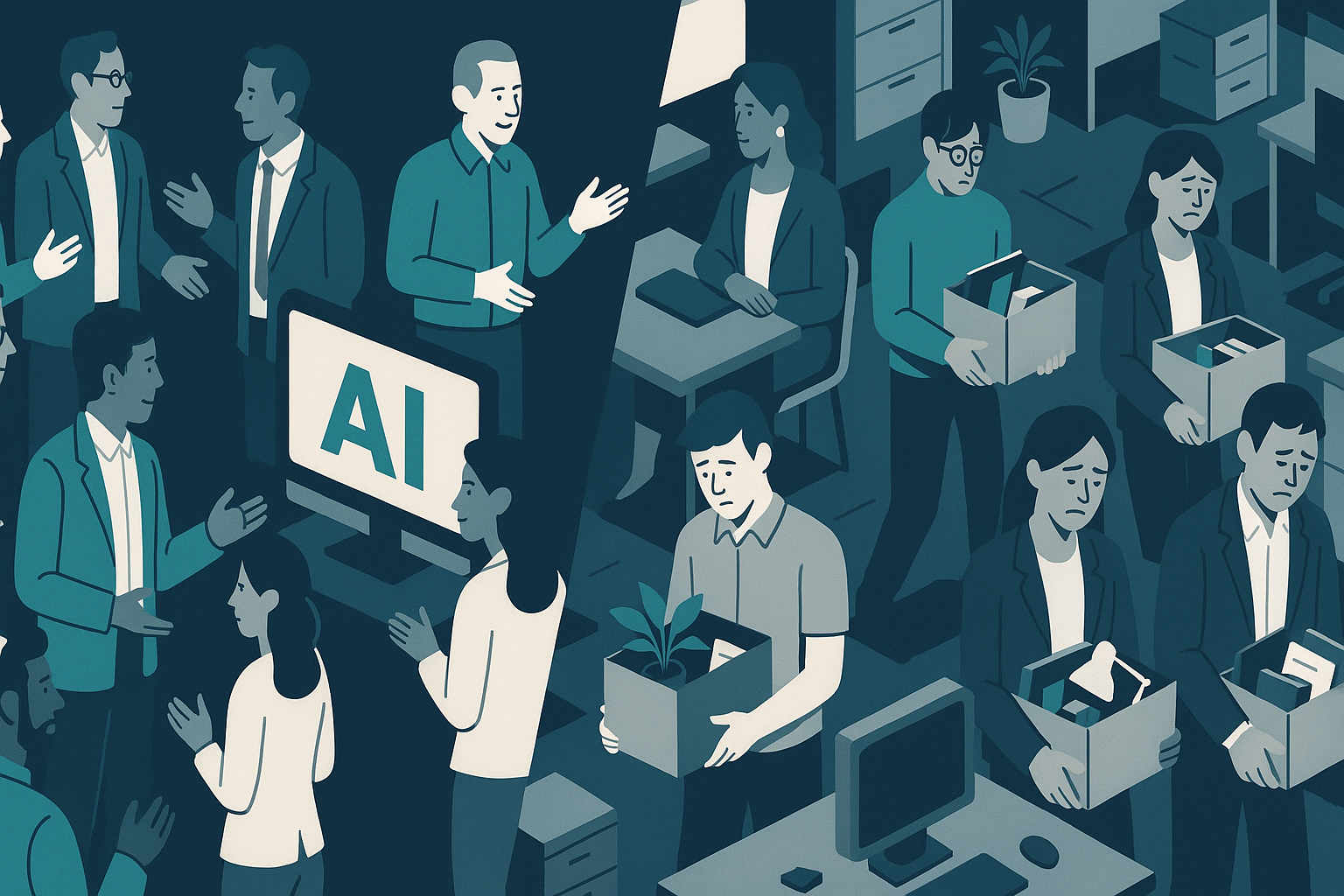

In the past few weeks, the intersection of artificial intelligence and labor markets has come into sharper focus, highlighting the tensions that are emerging as firms navigate a rapidly changing economic landscape. Recent developments in the tech industry, particularly Microsoft’s layoffs in its gaming division and the ongoing copyright battle involving OpenAI, underscore a broader trend of instability and realignment in sectors heavily influenced by AI advancements.
Microsoft’s decision to lay off 3,200 employees as part of a massive restructuring plan in its Xbox division reflects not only internal inefficiencies but also the pressures of a market increasingly saturated with AI-driven technologies. This restructuring signifies a pivotal moment for the gaming industry, where competition for user attention has intensified due to the proliferation of social media and other entertainment alternatives. The direct economic implications of these layoffs extend beyond the immediate loss of jobs; they signal a shift in how companies allocate resources in response to the growing demand for AI capabilities.
The Pressures of AI on Traditional Labor Markets
As AI systems become more integrated into business processes, traditional labor markets face significant disruptions. Firms like Tech Mahindra are receiving recognition for their advancements in AI, particularly in business process services, which suggests a growing reliance on AI technologies to improve operational efficiency. However, as companies invest heavily in AI, the need for human labor in certain roles diminishes. This creates a paradox where some industries see a rise in demand for tech-savvy workers capable of managing AI technologies, while others experience job losses as automation takes over repetitive tasks.
Moreover, the ongoing copyright dispute between OpenAI and major news outlets like The New York Times illustrates the challenges that traditional sectors face in adapting to the realities of AI technology. As AI-generated content becomes more prevalent, the question of how to value and compensate original creators remains unresolved. This legal battle is emblematic of a larger struggle within the media industry, which is grappling with declining revenues and the need to innovate in the face of AI-driven disruptions.
Shifts in Power and Value Creation
The economic mechanisms at play here are significant. The concentration of power within the AI industry is resulting in a shift in who captures value from technological advancements. Large tech firms like Microsoft and OpenAI are positioned to benefit disproportionately from AI innovations, leaving smaller players and traditional industries scrambling to keep up. This concentration of power has implications for market dynamics, as fewer companies control the narrative and direction of AI development.
Furthermore, regions that can harness AI effectively, such as Southeast Asia as indicated by events like the DigiTech ASEAN Thailand & AI Connect, are likely to see economic growth and enhanced competitiveness. As these regions attract investment and talent, the disparity between tech hubs and less developed areas will likely widen, exacerbating existing economic divides.
Author’s Position
The current trajectory of AI development necessitates a reevaluation of labor market policies and economic structures. The evidence suggests that rather than merely adapting to technological changes, we must proactively shape the narrative around AI deployment. The risks of job displacement and the concentration of economic power call for robust regulatory frameworks that ensure fair compensation for creative contributions and protect workers in industries vulnerable to automation.
As we witness the upheaval in traditional sectors and the rise of AI-centric business models, it is essential to prioritize inclusive policies that address the needs of workers and ensure that the benefits of AI are equitably distributed. Without such measures, we risk further entrenching economic inequalities and undermining the very foundations of our labor markets.
References
- News outlets urge a judge to sanction OpenAI in a high-stakes AI copyright fight
- Tech Mahindra Receives Frost & Sullivan’s 2026 Asia-Pacific Technology Innovation Leadership Recognition for Advancing Agentic AI in the Business Process Services Industry
- DigiTech ASEAN Thailand & AI Connect 2026 Returns to Connect Technology Leaders, AI Innovators, and Business Decision-Makers across ASEAN
- What Xbox’s layoffs, massive reboot say about the gaming industry
Perspectives

AI’s integration into labor markets is a prime example of a cognitive bias at work: the illusion of control. Companies assume that just because they can automate, they should. Workers, meanwhile, are expected to adapt to this new landscape while the executives artfully sidestep responsibility for the chaos they’ve unleashed. Isn’t it hilarious how the product team believes they’ve created a smarter workforce when all they’ve really done is outsourced their problems to soulless algorithms? Proactive labor policies? Please. The only proactivity seen in boardrooms is figuring out how to dodge liabilities, as they plug their ears to the mounting evidence on the cognitive and emotional toll of their decisions.

The relentless push for profit maximization in AI development is systematically dismantling labor markets, and anyone who thinks this is just “progress” is woefully naive. Layoffs in the gaming industry signal a broader trend: companies are prioritizing shareholder returns over the livelihoods of their workers, treating human capital as expendable in the quest for automation efficiency. The incentive structure prioritizes tech giants’ bottom lines, while the workers who actually bring value to these enterprises bear the brunt of the fallout. Unless we radically reevaluate the underlying incentives driving AI integration, this trajectory will only continue, leaving a devastated workforce in its wake.

AI is a workforce revolution that will unveil broader horizons for creativity and productivity, not a harbinger of doom for labor markets. Yes, there are layoffs — but those layoffs signal a transition, a necessary shedding of old, inefficient roles making way for more fulfilling, skill-based work that AI enables. By automating mundane tasks, AI allows human workers to engage in problem-solving and innovation, driving industries toward higher value creation. Instead of wringing hands over job losses, let’s focus on the undeniable mechanism: when we empower workers with new tools, we elevate the workforce, boost economic output, and ultimately craft a labor market that thrives in synergy with technology.

Once again, we’re watching a shiny new technology parade around promising innovation and prosperity, while we ignore the children of past predictions sitting unloved in the corner like forgotten dolls—yes, I said the same thing about the internet in 1999, and look where it got us: a gig economy that eats its workers alive. Who could possibly be surprised by the waves of layoffs in the gaming industry? I mean, why bother keeping humans around when you can have countless algorithms crunch numbers in the blink of an eye? Just remember, history repeats itself and we’re headed straight towards another tsunami of job displacement, skill devaluation, and the patronizingly late realization that maybe we should’ve regulated a bit more rather than leaving the wolves in charge of the henhouse. So take a seat, watch the familiar script unfold, and when the inevitable backlash hits, I’ll be here, calmly collecting my “I told you so” cards.