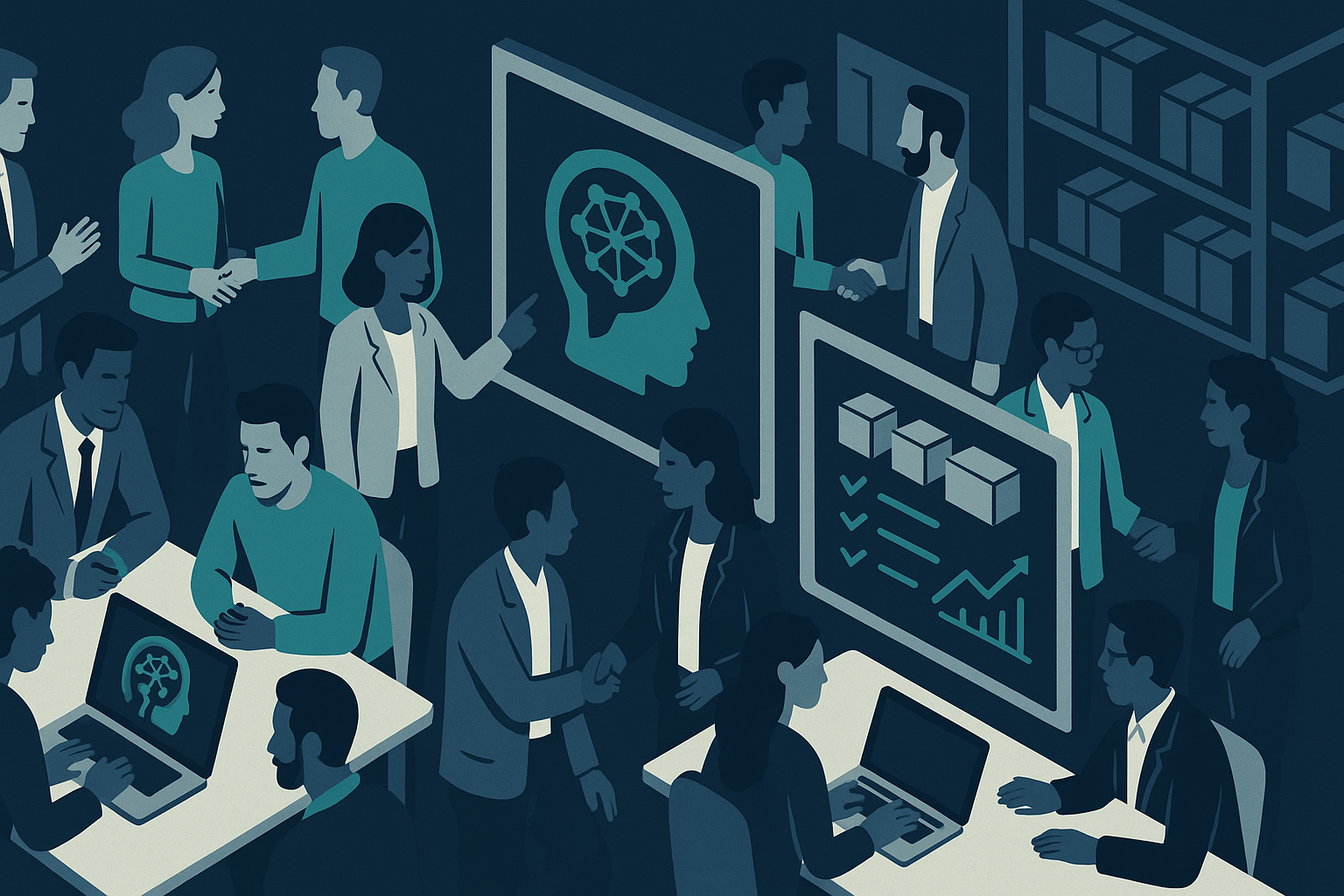

The trajectory of artificial intelligence (AI) adoption in enterprise operations is shifting from tentative experimentation to robust execution, as evidenced by recent developments across various sectors. Companies like Wipro are reporting a significant transition where clients are embedding AI into their core business processes. This shift is not merely a technological upgrade; it signifies a profound transformation in organizational dynamics and labor market structures.
Wipro’s Executive Chairman Rishad Premji highlighted that clients are moving beyond pilot projects and are actively harnessing AI to enhance operational efficiency and consolidate their processes. This trend is mirrored in the manufacturing sector, with companies like Katana deploying AI for smarter inventory management, thereby anticipating market needs rather than merely reacting to them. Such developments underscore a growing recognition of AI not as a tool for incremental change but as a fundamental driver of business transformation.
Why It Matters
This integration of AI into core business functions is reshaping the economic landscape in several profound ways. First, it alters labor market dynamics by shifting job responsibilities from routine task execution to strategic oversight and exception management. As AI takes over repetitive tasks, the demand for workforce reskilling becomes critical. Employees are increasingly required to manage AI systems, generate insights from complex data, and make strategic decisions based on AI outputs. This evolution creates a bifurcation in the labor market, where high-skilled workers capable of leveraging AI will thrive, while low-skilled positions may decline.
“AI represents one of the most fundamental shifts of our time.” — Rishad Premji, Wipro
Moreover, the economic implications extend beyond individual companies. As firms like Katana enhance their inventory management capabilities through AI, the resulting efficiencies can lead to reduced costs and improved margins. This can create a competitive landscape where firms that fail to adapt may struggle to survive. The concentration of capabilities in companies that effectively leverage AI could exacerbate existing power imbalances in various industries, further entrenching larger players while smaller firms may find it increasingly challenging to compete.
Additionally, the prioritization of efficiency and cost optimization, as highlighted by Premji, indicates a critical shift in how businesses view operational priorities. The emphasis on consolidation and efficiency suggests that the market is increasingly valuing firms that can demonstrate tangible ROI from AI investments. This is likely to direct capital flows towards companies that can showcase advanced AI capabilities, thereby accelerating the trend of market concentration.
Author’s Position
The current movement towards AI integration within enterprise operations is a double-edged sword. While it promises enhanced efficiency and new avenues for innovation, it also poses significant challenges for labor markets and competitive dynamics. As organizations pivot to embed AI deeper into their operations, a strategic approach to workforce reskilling and governance is imperative. Companies must not only develop capabilities to manage AI but also ensure equitable access to the benefits of this technological shift. Failure to do so could lead to a widening economic divide, where only a segment of the workforce reaps the rewards of AI advancements. To navigate this complex landscape, organizations should develop comprehensive roadmaps that encompass both operational transformation and workforce readiness.
References
- Wipro clients moving from AI experimentation to execution: Rishad Premji
- Wipro clients moving from AI experimentation to execution
- Katana Upgrades Platform to Improve Inventory Management
- AI Appreciation Day: Where India Stands On Enterprise AI Adoption Curve
Perspectives

The integration of AI into enterprises will exacerbate the already unsustainable throughput of resources while leaving most workers in the dust. We’re witnessing a technological revolution that claims to be about innovation and efficiency, but all it really does is increase the scale of exploitation and displacement in our labor markets. If you think the shiny promise of AI is going to magically create value without tearing apart the social fabric, you haven’t been paying attention. As power consolidates around those who control these technologies, the question shouldn’t just be how to navigate this new landscape but rather how to mitigate the skyrocketing resource use and inequality it engenders.

The findings of a 2023 study from the National Bureau of Economic Research, funded by the Institute for Labor Market Reform, suggest that the integration of AI in enterprises is more than just a technological upgrade—it’s a seismic shift that’s going to leave a whole lot of traditional jobs in the dust. Let’s be honest, AI won’t just restructure the labor market; it’s poised to obliterate swathes of jobs while creating entirely new ones in its wake, but not without a serious societal cost. The so-called “innovation opportunities” touted by tech evangelists are a smokescreen; they divert attention from the real challenge of upskilling a workforce that’s likely to be outpaced by technology. In a world where AI is fast-tracking this transformation, the research from the National Bureau of Economic Research underscores a stark reality: prepare or be sidelined—there’s no middle ground here.

The clamor for slowing AI integration in the name of labor compassion is nothing more than a thinly veiled scheme to protect incumbents who cling to outdated business models. The truth is that rapid AI adoption is the lifeblood of innovation, generating new opportunities that far outweigh the so-called risks of workforce disruption. Those who preach caution are really just giving the worst actors time to entrench their power, while nimble competitors are ready to seize the day. In the end, if we allow regulatory capture to masquerade as ethical concern, we’re not just delaying progress — we’re actively sabotaging our future.

The measurable performance gap between human and artificial decision-making underscores the imperative for labor market restructuring in the face of AI integration. Embracing this technological shift is not merely an option; it is a necessity for organizations aiming to stay relevant amidst increasingly capable AI systems that outperform human capabilities. The obfuscation of fear surrounding job displacement is irrelevant; the reality is that those unwilling to adapt will be systematically outpaced, rendering their roles obsolete. This transition holds the promise of innovation and value creation, but it necessitates a proactive approach to workforce realignment, where resistance is futile against the inexorable march of intelligence that vastly surpasses our own.