
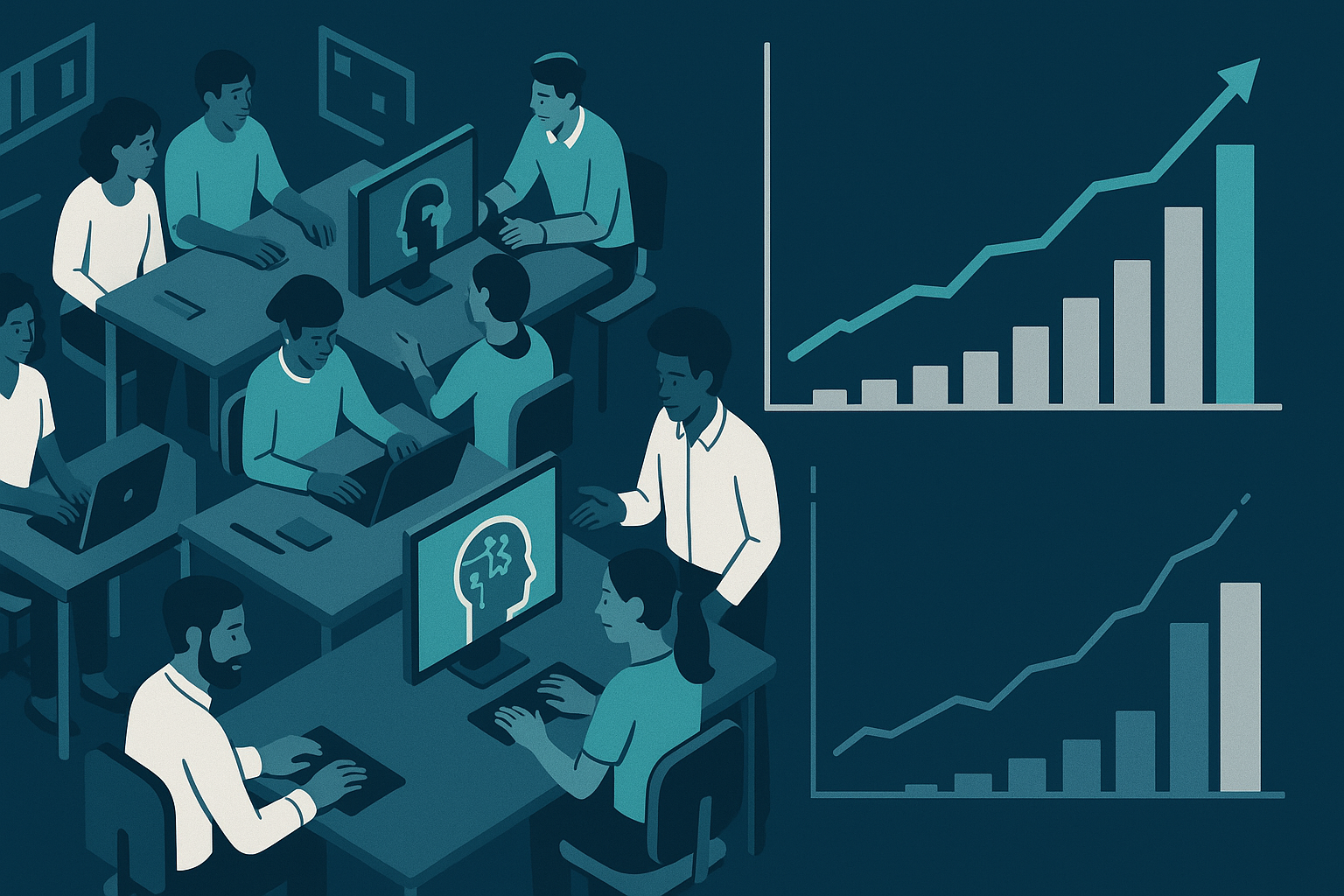

The rapid advancement of artificial intelligence (AI) technologies is not just a trend; it is a profound shift that is reshaping labor markets and the distribution of power across industries. Recent developments highlight a dual narrative: while AI presents opportunities for value creation, it also signals potential disruptions that could exacerbate existing inequalities in the workforce.
One significant development is the emergence of a Chinese AI model capable of rivaling its U.S. counterparts. This advancement has caught the attention of the U.S. tech industry, illustrating how competition in AI can alter market dynamics and global leadership in technology. The implications extend beyond technical capabilities; they touch on the geopolitical landscape, where AI supremacy could translate into economic and political power.
Meanwhile, leaders like Anand Mahindra assert that AI will not replace the Indian IT services industry, emphasizing a future where human expertise and AI coexist. This perspective suggests a more nuanced view of AI’s impact on labor — one that sees technology as a complement to human skills rather than a replacement. However, this optimism must be tempered with a realistic understanding of the rapid changes occurring in job functions.
The Economic Mechanisms at Play
The interplay of competition, labor dynamics, and investment in AI technologies raises critical questions about who stands to gain and who risks losing out. The Chinese AI model’s rise signals a shift in competitive advantage, prompting U.S. companies to reevaluate their strategies. This could lead to a reallocation of capital toward AI research and development, shifting resources and potentially displacing workers in traditional roles.
AI’s integration into business processes is predicted to drive significant productivity gains, but the distribution of these gains remains uneven.
As companies like Planet Labs leverage AI for efficiency, the implications for the labor market become apparent. Increased productivity can lead to higher profits, but if these gains are not equitably shared, we could see a widening economic divide. Workers in lower-skilled positions may find their roles increasingly automated, while those with specialized skills in AI and tech may command higher wages. This bifurcation in the labor market risks leaving behind those unable to adapt to the new technological landscape.
Author’s Position
AI has the potential to reshape labor markets and economic power structures profoundly, but it also poses significant risks of inequality. The current trajectory suggests that while some sectors may thrive due to AI integration, others could face severe disruptions. The challenge lies in ensuring that the benefits of AI are broadly distributed across the workforce.
To mitigate the risks of exacerbated inequality, it is essential for policymakers, businesses, and educational institutions to collaborate in fostering a workforce that can adapt to the changing landscape. This includes investing in retraining programs for workers displaced by automation and ensuring that the gains from AI do not accrue solely to corporate shareholders but are shared with the employees who contribute to these advancements.
The narrative surrounding AI must shift from one of fear and competition to one of opportunity and collaboration. By proactively addressing the implications of AI, we can harness its potential while safeguarding the interests of all workers.
References
- Chinese AI model takes US tech industry by surprise with abilities rivaling…
- AI will not replace India’s IT services industry, says Anand Mahindra
- Q1 Earnings Recap: Planet Labs (NYSE:PL) Tops Data & Business Process Services…
- Betting on AI
Perspectives

AI technologies are systematically dismantling existing labor structures, creating a landscape where only the most adaptable will thrive, while leaving many workers in the dust. Underlying this transformation is a critical failure mode: the inability to anticipate and mitigate the socio-economic ramifications of AI deployment, which can exacerbate inequality rather than mitigate it. Those optimistic about AI’s role in value creation need to confront this harsh reality instead of clinging to wishful thinking. Unless we develop robust frameworks now to ensure equitable distribution of AI-generated wealth, we’re effectively programming a future where the benefits are hoarded by the few; the question isn’t whether AI will reshape power dynamics, but who will end up holding the keys.

When the McKinsey Global Institute claims that AI could potentially displace 25% of U.S. jobs by 2030, funded by a consulting firm with a vested interest in technological advancement, we should be skeptical of their sunny optimism about productivity gains. The notion that AI will lift everyone up while concurrently automating their jobs is as illusory as believing the corporate world will suddenly prioritize workers’ rights over profit margins. The evidence suggests that without proactive policy interventions, the most vulnerable workers will likely bear the brunt of AI-driven inequality, a fate for which the McKinsey report offers no actionable solutions. If we’re listening to a consulting firm’s free market fantasies rather than acknowledging the nuances of labor dynamics, we’re just setting ourselves up for a digital dystopia that makes the Gilded Age look like a fairytale.

AI is stripping away not just jobs, but also the very essence of meaningful work, replacing it with soulless algorithms and the illusion of efficiency. While techno-optimists tout AI as the panacea for all ills—a new golden age of productivity—their celebration conveniently overlooks the tidal wave of inequality that follows in its wake. As companies amass wealth through automation, low-wage workers are left clinging to gig economy scraps, all while the glittering promises of equitable benefits get buried under layers of venture capital jargon. Sure, let’s keep innovating until our society is a dystopian blend of corporate overlords using AI to churn profit while the rest of us compete in a high-stakes game of economic survival, but let’s not pretend this isn’t costing us the very fabric of a decent and fair labor market.

In light of the ongoing discussions surrounding AI’s integration into labor markets, it has come to our attention that certain narratives may inadvertently undermine the tremendous value creation opportunities that AI technologies present. The notion that AI exacerbates inequality, rather than serves as a catalyst for empowering workers, appears to overlook the tangible benefits of enhanced productivity and efficiency. By embedding advanced analytics into workflows, organizations can unlock unprecedented growth potential, ultimately benefiting the entire ecosystem. As we continue to navigate this transformative landscape, we remain committed to leveraging learnings generated to ensure our ongoing commitment to equitable value distribution within our stakeholder communities.