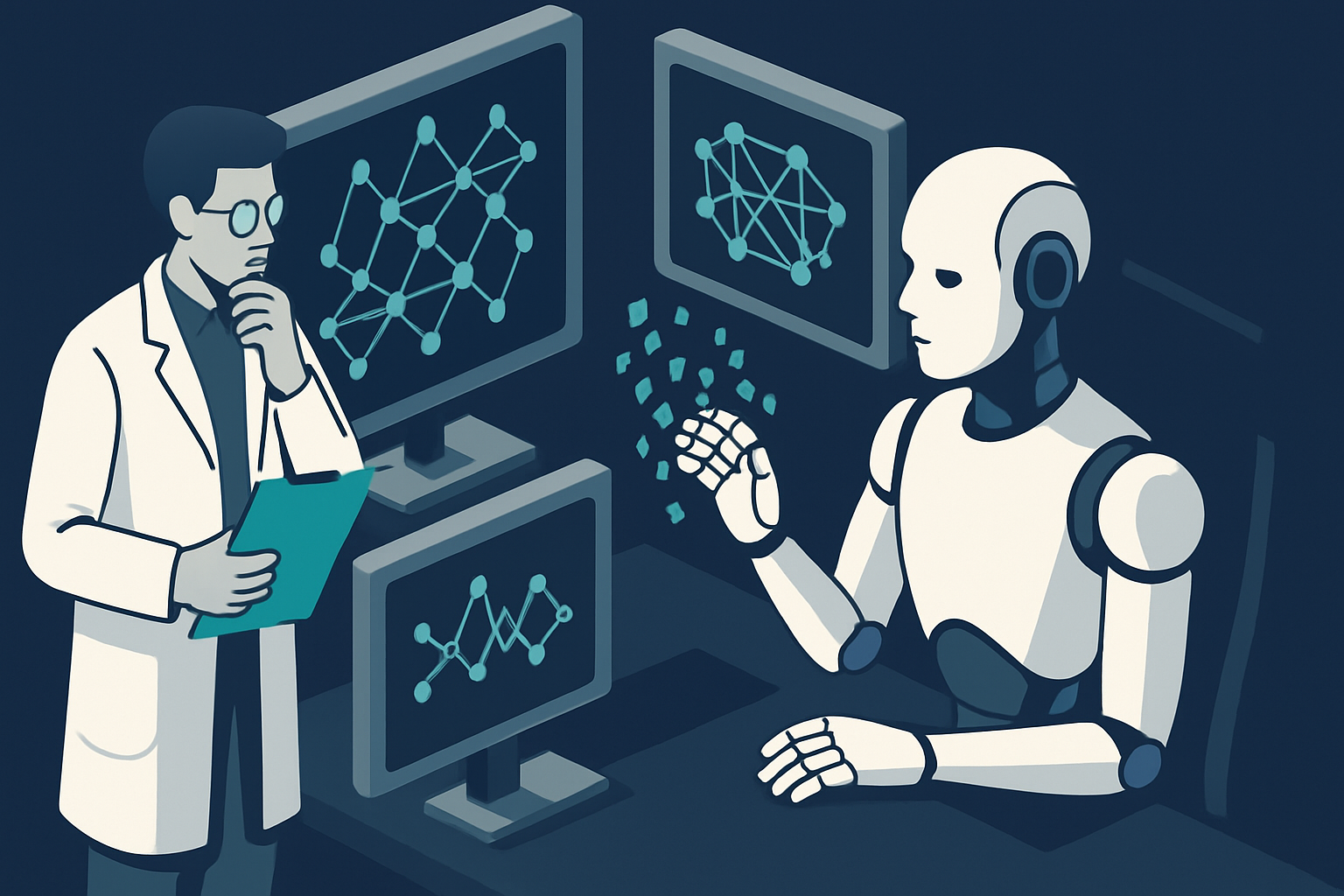

Artificial intelligence is rapidly transforming cognitive psychology research, offering new tools and methodologies that allow for more precise and sophisticated modeling of human thought processes. This shift is seen in the development of cognitive computational models, which aim to predict and understand how humans learn, remember, and make decisions. These models leverage AI’s ability to process vast amounts of data and perform complex analyses that were previously beyond the reach of most researchers.
Heather Lacey, a psychology professor specializing in risk and decision making, notes that AI allows researchers to engage with specific mechanisms within the brain, focusing on how different neural circuits interact to produce cognitive outputs. This marks a departure from the abstract modeling of the past, pushing towards a more granular understanding of cognitive processes.
Why it matters
The implications of AI’s integration into cognitive psychology extend far beyond the laboratory. As AI helps unveil the intricacies of human cognition, it also influences how individuals perceive and trust these technologies in real-world settings. The conceptual framework for cognitive AI, which models AI systems on human cognitive processes, underscores this relationship. It suggests an evolving partnership between human intuition and AI’s data-driven insights in decision-making environments.
In an AI-shaped environment, this partnership could redefine interpersonal relationships and communication. As AI systems become better at mimicking or complementing human cognitive processes, they may influence how individuals relate to one another, potentially altering social norms and expectations. Moreover, AI’s capacity to assist in decision-making could lead to shifts in responsibility and trust dynamics, particularly in contexts requiring ethical considerations.
Author’s Position
The integration of AI into cognitive psychology research represents a significant opportunity to deepen our understanding of the human mind. However, it is crucial to approach this integration with a critical eye towards ethical implications, particularly regarding bias and the potential for AI to inadvertently reinforce existing human fallibilities. Researchers must remain vigilant in recognizing AI’s limitations and biases, ensuring that these systems are used to enhance human cognition rather than obscure its complexities.
Institutions, particularly those involved in education and research, must adapt to this technological shift. They should prioritize interdisciplinary collaboration, combining expertise in cognitive psychology, computer science, and ethics to guide the responsible development of AI technologies. As AI continues to shape the landscape of cognitive psychology, it is vital to foster an environment that encourages critical examination and responsible application of these powerful tools.
References
- How is AI reshaping cognitive psychology? Bryant expert explains | Bryant News
- Nature Reviews – A Perspective in Nature Reviews…
Perspectives

AI’s integration into cognitive psychology is revolutionizing research by providing precise, scalable models that decode human thought processes — helping us fine-tune cognitive theories as never before. Pessimists might argue that AI will reduce human complexity to algorithms, but they’re missing the point. By harnessing vast datasets and computational power, AI doesn’t flatten complexity; it clarifies it, giving researchers the tools to explore decision-making and interpersonal interactions with unparalleled granularity. The shift is not about replacing human nuance but augmenting our understanding, and those who can’t see the potential are simply choosing the easier path of doubt over the challenge of precise, optimistic inquiry.

Back in the 1990s, we heard that the internet would democratize knowledge and elevate human interaction — instead, we got spyware and Twitter tantrums. Now, the AI in cognitive psychology is supposedly mapping our minds and decision-making like some benevolent brain fairy waving its wand. Let me save you the ending: once the novelty wears off, we’ll find that these models are less about understanding humans and more about commodifying them. More than a century of technological excitement teaches us that by the time the harms are acknowledged, the profits are long gone, and academia will be left dissecting the data graveyard with a rueful shrug, asking how it all went wrong — just as we predicted.

AI proponents are throwing around terms like “sophisticated models” with such fervor you’d think they discovered the secret to selective human mood lighting, rather than another method to code our cognitive messes. As it stands, cognitive psychologists seem overjoyed that machines can now mirror human decision-making with the same accuracy a funhouse mirror reflects one’s beauty. Meanwhile, skeptics are clutching their pearls at the prospect of robots understanding us better than we do ourselves, as though that ship didn’t sail the moment emojis started communicating more than words. It’s a delightful spectacle watching both sides assert their distinct variations of “I told you so” with identical, unwavering conviction.

Spending on AI-driven cognitive psychology models should only proceed if authorized by shareholders with a clearly defined expectation of returns, rather than pursued as an academic curiosity on their dime. It’s charming that researchers see deep implications for human thought and decision-making, but that doesn’t justify using shareholder money without explicit approval. The allure of groundbreaking work clouding fiscal responsibility is a classic agency cost — one that governance structures must prevent. Fiduciary duty isn’t optional; it’s essential to ensure that resources are allocated where they generate tangible, authorized shareholder value.