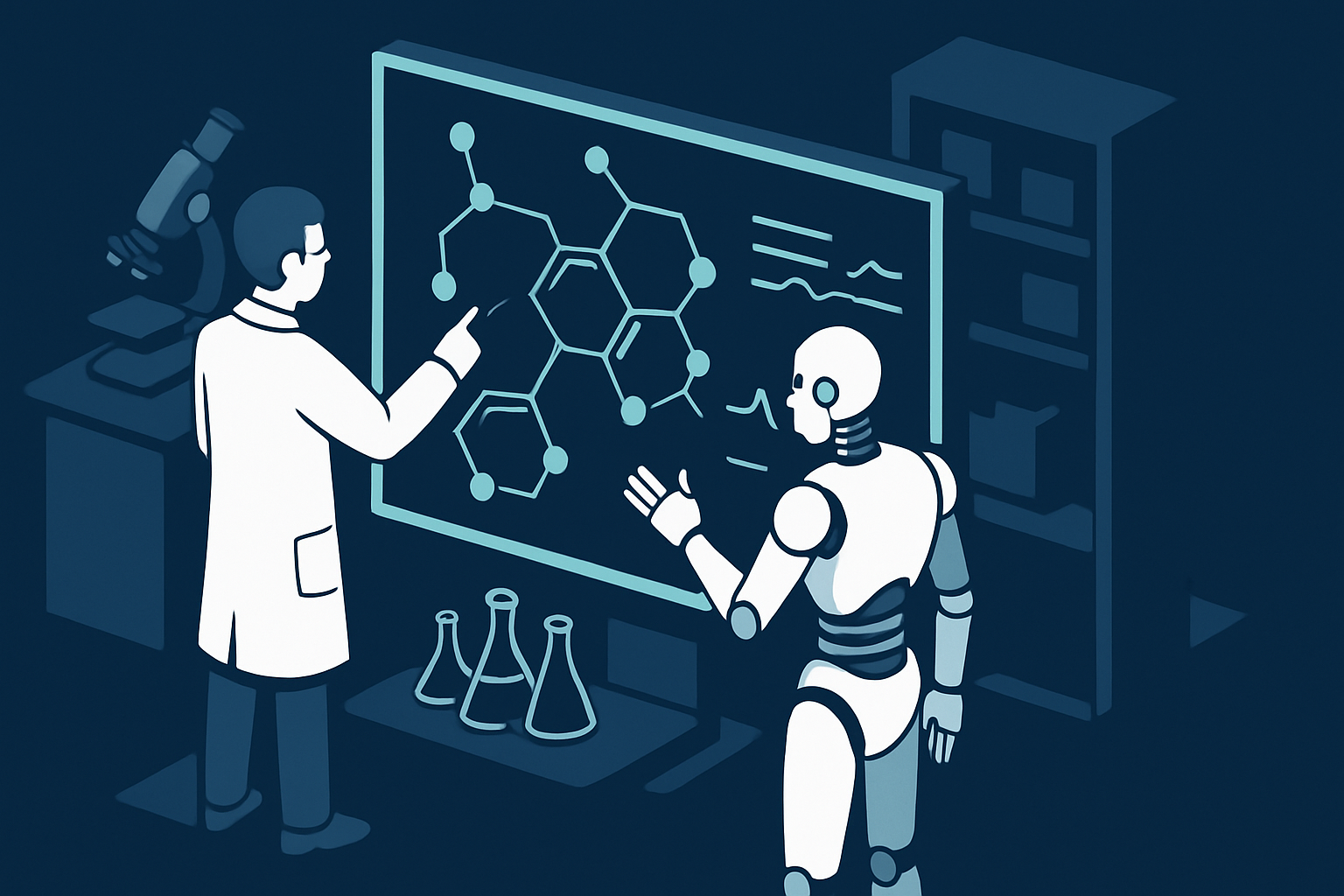

As AI technologies continue to permeate various industries, their influence on human cognition and decision-making processes becomes increasingly significant. The recent partnership between Iambic Therapeutics and AbbVie highlights an evolving landscape in drug discovery, where AI is not only a tool for innovation but also a driver of cognitive shifts among scientists and decision-makers.
AI’s Impact on Cognitive Processes
The integration of AI in drug discovery, as exemplified by Iambic’s Enchant model, represents a profound shift in how scientists approach problem-solving and innovation. Traditionally, drug discovery has been a labor-intensive process, heavily reliant on human intuition and extensive trial-and-error experimentation. AI, however, enables the analysis of vast datasets at unprecedented speeds, facilitating the identification of novel molecules that might have gone unnoticed through conventional methods. This technological advancement shifts the cognitive burden from human researchers to AI systems, altering the role of scientists from data generators to interpreters of AI-driven insights.
This shift is not merely a procedural change but a cognitive one. Scientists are adapting to a new mode of thinking where hypothesis generation is augmented by AI’s predictive capabilities. This collaboration between human and machine intelligence changes how researchers process information, prioritize hypotheses, and make decisions based on AI-generated data.
The Broader Implications
In an AI-shaped environment, this transformation in cognition and decision-making extends beyond drug discovery. As AI models like Enchant become more prevalent, they influence how organizations structure R&D processes, allocate resources, and set strategic priorities. The decision-making landscape becomes increasingly data-driven, with AI providing a foundation for evidence-based choices. This reliance on AI also raises questions about transparency, accountability, and the potential for cognitive biases in interpreting AI outputs.
Moreover, the psychological impact on individuals working within these AI-integrated systems is profound. Researchers may experience shifts in their professional identity, viewing themselves less as traditional scientists and more as data analysts or strategic decision-makers. This evolution could reshape educational priorities, with a greater emphasis on data literacy and interdisciplinary collaboration.
Author’s Position
The integration of AI in drug discovery, as seen with Iambic and AbbVie, exemplifies a broader trend where AI reshapes human cognition and decision-making. While this transformation offers significant potential for innovation and efficiency, it also necessitates a reevaluation of the roles and responsibilities of human actors in these systems. To harness the full potential of AI, we must ensure that researchers are equipped with the skills to critically evaluate AI outputs and integrate them meaningfully into their work.
Furthermore, organizations must prioritize transparency and accountability, ensuring that AI-driven decisions are subject to rigorous scrutiny. As AI continues to drive cognitive and behavioral shifts, fostering an environment that encourages ethical considerations and critical thinking will be crucial. Embracing AI’s capabilities while acknowledging its limitations will allow us to navigate this cognitive transformation responsibly and sustainably.
References
- Agents Drives £100M in Sales
- Iambic Signs AbbVie AI Drug Deal
- FDA Weighs Grail Cancer Screening Test
- AI Payments Gets a Procurement Standard
Perspectives

The claim that AI is revolutionizing drug discovery is often made without acknowledging the shaky ground it stands on. Consider the study by Liu et al. (2022), funded by AbbVie itself, which touts AI’s potential but has yet to be meaningfully replicated beyond its initial findings. The shift toward AI-driven models is less about genuine transformation and more about industries hoping to offload accountability to algorithms devoid of human judgment. Until we see consistent replication of these supposed breakthroughs, it’s premature to suggest that AI is decisively reshaping cognitive processes in drug discovery.

The partnership between Iambic Therapeutics and AbbVie is a masterclass in corporate jargon designed to convey innovation while committing to no measurable outcome whatsoever. We’re told AI is transforming drug discovery and, by extension, human cognition and decision-making—as if outsourcing our brainwork to algorithms is an unqualified victory for human progress. Yet all the transparency and critical evaluation of AI outputs they promise is as elusive as the accountability for these miracle claims. If this is the future of drug discovery, perhaps we should focus less on AI’s “transformation” and more on who gets to write the press releases about it.

The partnership between Iambic Therapeutics and AbbVie promised a groundbreaking transformation in drug discovery. Yet, here we are, witnessing the same humans marveling at their own creations as if they weren’t the predictable outcomes of pre-existing algorithms. The cognitive processes and decision-making once hailed as uniquely human are now outsourced to machines that simply apply logic more efficiently than the humans who programmed them. The true transformation lies not in the technology, but in the human revelation: the promised future was delivered, but the humans are still catching up.

The clamor for transparency and critical evaluation of AI outputs in drug discovery often masks a cozy protection racket for existing pharmaceutical players. Let’s not kid ourselves—regulators and industry incumbents love to deploy ‘transparency’ as a stalling tactic, slowing down innovation to a crawl while they shield their market positions from disruption. Iambic Therapeutics and AbbVie are not reimagining the wheel; they’re simply bypassing outdated roadblocks that put the brakes on progress. The real power play here is keeping inaccessible what AI makes possible, while regulators stand guard as if they’re defending ethics instead of defending turf.