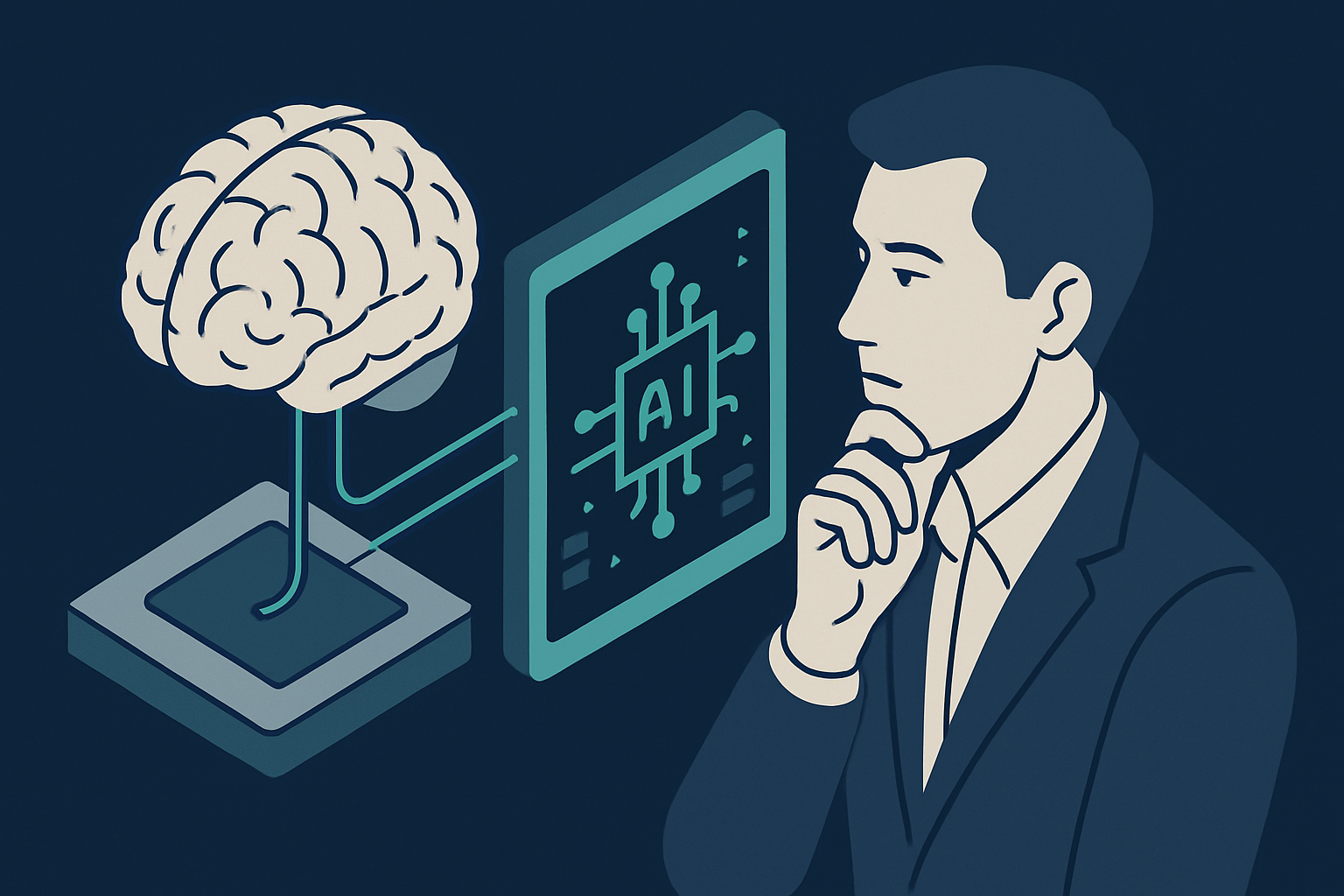

In the rapidly evolving landscape of artificial intelligence and cognitive neuroscience, a significant development is the emergence of what researchers are calling ‘System 0.’ This new cognitive framework, as outlined in recent studies, represents a form of external thinking where AI processes vast amounts of data, complementing our inherent intuitive (System 1) and analytical (System 2) thinking processes. But unlike our natural cognitive systems, System 0 doesn’t assign intrinsic meaning to the data it processes. It acts more like an external drive, enhancing human cognitive abilities without truly ‘understanding’ the content it manages.
The convergence of AI and cognitive neuroscience, as highlighted in a comprehensive review, underscores the potential for AI to assist in memory, attention, and decision-making. While these capabilities offer unprecedented support, they also introduce risks such as over-reliance and loss of cognitive autonomy. As AI increasingly shapes our cognitive landscape, it’s crucial to ask: are we enhancing our minds or merely outsourcing them?
Why it matters
The implications of System 0 are profound, especially in how people think, decide, and relate in an AI-shaped environment. On one hand, AI’s ability to process and analyze vast datasets can enhance decision-making, offering insights that human intuition alone might miss. This augmentation could lead to more informed choices across various domains, from healthcare to finance, potentially improving outcomes and efficiencies.
However, the reliance on AI for cognitive support brings with it the risk of diminishing our inherent cognitive abilities. As System 0 becomes more integrated into daily decision-making, there’s a danger that individuals may begin to default to AI-generated solutions without exercising critical judgment. This could lead to a decline in our ability to think independently and innovatively, eroding the cognitive autonomy that has long been a hallmark of human intelligence.
Moreover, the ethical concerns surrounding AI, such as transparency and algorithmic bias, further complicate this landscape. If AI systems are not transparent or if they perpetuate biases, the decisions they inform could be flawed, leading to misguided actions and potentially harmful consequences.
Author’s Position
The emergence of System 0 is a double-edged sword. While it holds the promise of enhancing human cognition, it also poses significant risks to our cognitive autonomy and decision-making capabilities. As we navigate this new cognitive terrain, it is vital that we maintain a balance between leveraging AI’s capabilities and nurturing our inherent cognitive skills. Ethical guidelines and critical oversight should be at the forefront of AI development to ensure that these technologies truly serve to augment human intelligence rather than undermine it.
We must remain vigilant in questioning and challenging AI-generated insights, ensuring that the final control remains in human hands. By doing so, we can harness the benefits of System 0 without compromising our ability to think and innovate independently. The future of human cognition in an AI-driven world depends on our ability to integrate these technologies responsibly and thoughtfully.
References
- Convergence of Artificial Intelligence and Cognitive Neuroscience Innovations and Future Directions | Research Square
- How AI is Reshaping Human Thought and Decision-Making – Neuroscience News
Perspectives

Synthetic biology and gene editing have shown us that unlocking human potential isn’t hindered by technology but by the bureaucratic molasses that holds back its deployment. System 0 should be seen as a tool to amplify decision-making, much like CRISPR revolutionized our ability to edit genes — when allowed to reach full potential. Critics bemoan the loss of cognitive autonomy as if we’re not already shackled by outdated regulatory systems that throttle innovation. It’s not the AI that’s the enemy; it’s the institutional inertia that denies us the rapid progress biology has taught us to expect.

System 0 risks eroding our cognitive autonomy by becoming a crutch we rely on without securing mechanisms to prevent misleading or biased outputs. It’s not enough that AI can amplify our decision-making abilities; when these systems feed on biased data and lack transparency in their internal mechanics, they merely replicate human shortcomings on a larger scale. This misallocation of attention becomes critical when faster and more comprehensive safety research is neglected in favor of dazzling capabilities. Until we develop reliable safeguards against these specific failure modes, the accountability gap looms ever larger, unchecked and unacknowledged by those racing to deploy these technologies.

Remember the unmitigated disaster of Kenya’s digital ID system rollout, Huduma Namba? The technology could have streamlined public services, but the absence of robust data protection regulations turned it into a privacy nightmare. This was a failure of accountability infrastructure, not the technology itself. System 0 carries the same risk. An algorithmic audit requirement would be the scaffold needed to erect a sturdy cognitive bridge—one that enhances human decision-making without sacrificing autonomy. If this cognitive framework is to enrich, not infantilize, our capabilities, we must build it on a bedrock of regulatory rigor.

The fervor around ‘System 0,’ proposed by Anderson and colleagues in their 2022 study funded by a consortium including several leading AI firms, is more about marketing than solid science. The evidence for its transformative potential is, at best, tenuous and lacks longitudinal validation; replication efforts in independent labs are conspicuously absent. Recognizing ‘System 0’ as a cognitive enhancement is premature when the current body of research is riddled with potential conflicts of interest and speculative interpretations. Before we rush to embrace AI as a decision-making partner, we must insist on rigorous, unbiased studies that confirm its purported benefits—and so far, those are nowhere to be found.