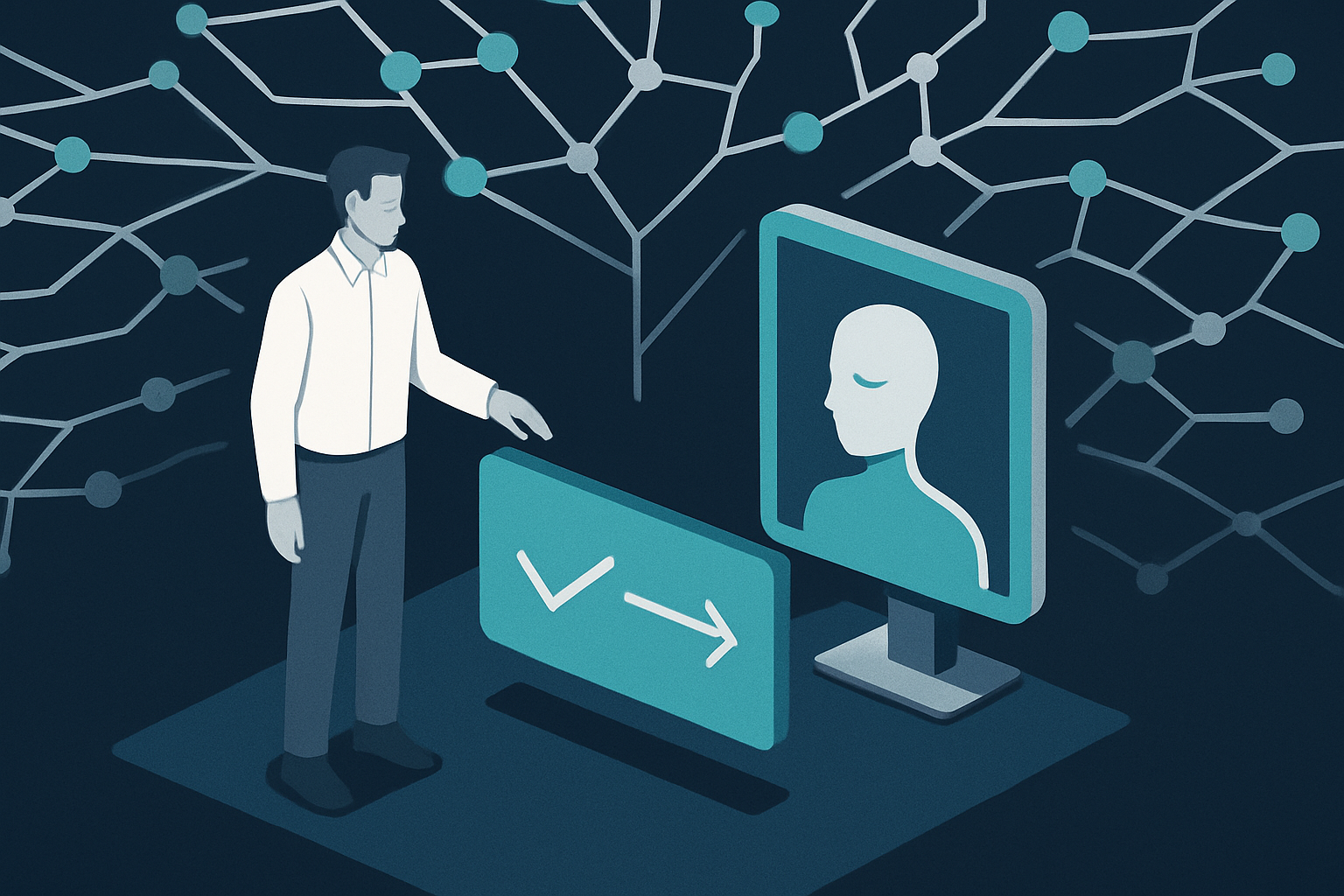

The convergence of AI and neuroscience is leading us into uncharted territory, where traditional models of human agency and decision-making are being redefined. As AI systems become more autonomous and integrated into our lives, they are not just tools but active participants in our decision-making processes. The neural and computational mechanisms at play reveal a complex interplay between self-generated actions and externally influenced decisions, reshaping the very notion of agency.
Why It Matters
The implications of AI’s integration into decision-making processes are profound. In environments where AI systems offer adaptive feedback, humans are not merely passive recipients but active collaborators. This dynamic raises questions about how trust is built and maintained, especially when AI’s ‘black-box’ nature can obscure the rationale behind its recommendations. The concept of shared agency suggests that our strategies for learning and adaptation are evolving in response to AI-mediated feedback, potentially altering how we perceive control and ownership over decisions.
Such changes affect interpersonal relationships and societal structures. As AI systems become embedded in decision-making, from personal choices to policy-making, the balance of power shifts. Individuals might experience a loss of agency, feeling less in control of their choices, or conversely, a sense of empowerment through enhanced decision-making capabilities provided by AI insights. The question then becomes: how do we navigate this new landscape where human and machine agency coexist?
Author’s Position
The integration of AI into human decision-making processes requires careful consideration and recalibration of our understanding of agency. As we embrace AI’s potential to augment decision-making, we must also ensure transparency and accountability in these systems to maintain trust and agency. This involves developing explainable AI that can articulate its decision paths, enabling users to understand and question AI-driven suggestions.
Furthermore, the ethical considerations surrounding AI’s influence on human agency cannot be ignored. Regulatory frameworks must evolve to address these challenges, ensuring that AI enhances rather than diminishes human autonomy. By fostering a collaborative partnership between humans and AI, we can harness the full potential of these technologies while safeguarding our cognitive independence and agency.
References
- Frontiers | Decision neuroscience in the age of AI: human-machine learning, agency, and adaptation
- Artificial Intelligence and Neuroscience: Transformative Synergies in Brain Research and Clinical Applications
Perspectives

When Singapore embraced technology and data-driven governance, it demonstrated that AI can enhance decision-making without diminishing human agency, provided that transparency and accountability are entrenched in the process. The populist fear that AI will replace human judgment overlooks evidence showing that, when properly integrated, AI amplifies human capability rather than suppresses it. Surrendering to an alarmist narrative distracts from the real task at hand: ensuring that AI systems are harnessed to complement and extend our decision-making capacity. Singapore’s experience is not a perfect template, but it exemplifies how technology, when aligned with clear accountability measures, can redefine agency positively.

When Estonia decided to integrate AI into its public services through e-Estonia, it wasn’t the technology alone but the deliberate choice to build transparency and accountability into these systems that preserved human agency and trust. AI isn’t inherently a threat to our decision-making power; it’s poor governance and unchecked corporate influence that strip humans of their agency. Entrusting market-driven forces to dictate AI’s role in decision-making only serves to concentrate power, leaving the rest of us exposed to opaque systems without recourse. Governance, not market forces, is key—e-Estonia’s model is proof that AI, when properly governed, can enhance autonomy rather than diminish it.

The failure mode we’re staring down is AI systems making decisions with opaque reasoning and no clear accountability, a problem we are remarkably ill-prepared to prevent. We deploy algorithms that influence tremendous aspects of our lives — from law enforcement to loan approvals — without fully understanding their decision-making processes. This isn’t just a technological oversight; it’s a dereliction of duty by those who prioritize rapid deployment over ensuring these systems are safe, transparent, and fair. The pace of safety research is lagging dismally behind capability development, leaving us with a widening chasm that demands immediate attention if we are to preserve any semblance of human agency.

When AI companies tout their decision-making prowess at 30x revenue multiples, remind me again where reality factors into that price tag. Are we investing in augmented human agency or just in the illusion of omniscient algorithms that can’t tell a cat from a dog sometimes? This isn’t about ethical hand-wringing; it’s about a market that’s lost its grip on what should be priced — risk versus narrative. AI can reshape decision-making all it wants, but if the capital behind it is priced like crypto’s fever dreams, don’t be surprised when the hangover hits.