
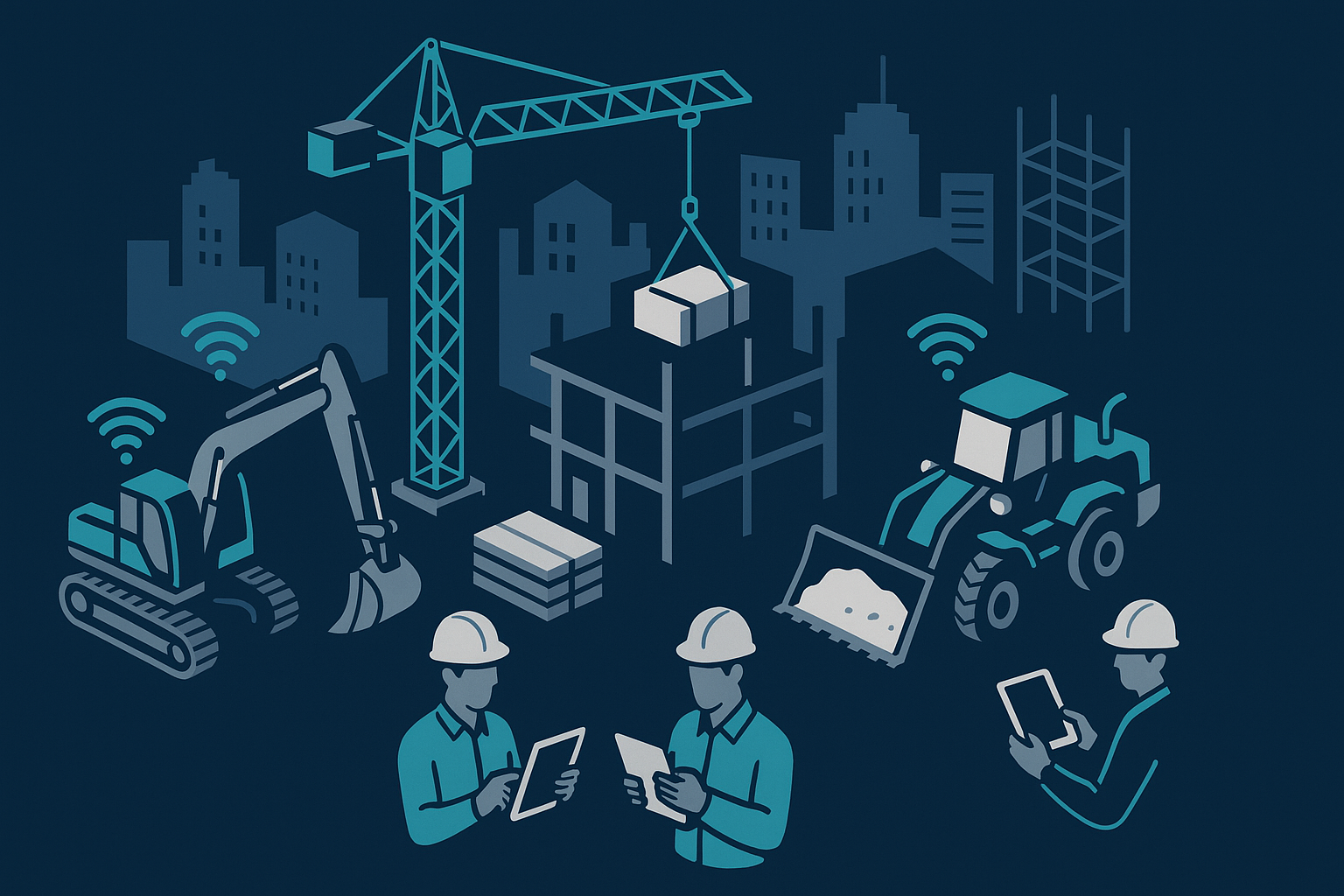

The recent developments in housing legislation, infrastructure projects, and supply chain management highlight a critical trend: the increasing integration of AI and technology in reshaping capital allocation and labor dynamics. Notably, the construction sector, particularly in large-scale housing projects, is undergoing a transformative shift driven by AI and technological advancements.
The Technological Shift in Housing and Infrastructure
As seen with the University of Florida’s ambitious housing expansion project, AI is playing a pivotal role in optimizing construction processes and resource allocation. Balfour Beatty’s approach to integrating developer and design-builder roles showcases how AI tools are streamlining project timelines and budgets. This technological integration is becoming a standard in major infrastructure projects, driven by the need for efficiency and precision in capital deployment.
Simultaneously, the new housing bill’s loopholes, as highlighted by Glenn Beck, reveal a nuanced economic landscape. While the legislation aims to curb corporate acquisitions of single-family homes, it inadvertently opens doors for large firms to dominate the rental market through new constructions. This shift underscores the growing influence of technology in enabling firms to navigate regulatory frameworks and optimize capital deployment in real estate.
Implications for Markets and Capital Flows
The economic implications of these technological advancements are multifaceted. First, they reshape labor markets by reducing reliance on traditional construction labor and increasing demand for tech-savvy professionals capable of managing AI-driven projects. This shift could lead to significant wage disparities and necessitate upskilling initiatives to bridge the gap.
Moreover, the capital flows into these technology-driven projects are reshaping market dynamics. Companies like American Homes for Rent are redirecting investments from existing properties to new constructions, driven by AI’s ability to optimize design and construction processes. This reallocation of capital is likely to impact housing affordability and availability, as rental-focused developments become more prevalent.
In the broader context, the integration of AI into supply chain management, as demonstrated by CN’s grain plan, highlights the potential for technology to enhance efficiency and transparency. However, it also raises questions about the centralization of power and the potential for market monopolization if a few tech-savvy firms dominate supply chains.
Author’s Position
The integration of AI in construction and housing markets presents both opportunities and challenges. On one hand, AI-driven efficiencies can lead to cost reductions and improved project outcomes, benefiting consumers through potentially lower housing costs and faster project completions. On the other hand, this technological shift risks exacerbating existing inequalities in labor markets and housing access.
To harness the benefits of AI while mitigating its downsides, policymakers must focus on ensuring equitable access to technological education and upskilling programs. Furthermore, regulatory frameworks should be adapted to prevent the monopolization of markets by tech-enabled firms, ensuring a competitive landscape that benefits consumers and workers alike.
Ultimately, the successful integration of AI in these sectors will depend on balancing innovation with inclusivity, ensuring that the technological advances translate into broad-based economic benefits rather than concentrated gains for a select few.
References
- Glenn Beck exposes the SECRET loophole in the new housing bill
- Sedona Chamber tackles Pocket Fire recover
- Balfour Beatty Lands UF Housing Project in Growth Push
- CN Releases 2026–2027 Grain Plan: Strengthening Canada’s Supply Chain
Perspectives

A 2022 study led by Andrew McAfee and Erik Brynjolfsson at MIT found that AI can boost construction productivity by up to 50%, but it’s the distribution of these gains that raises concerns. The research, funded by the National Science Foundation, highlights that while large corporations gobble up efficiency dividends, everyday workers could be left grappling with job displacement — a finding that’s unfortunately replicated across several sectors. When we talk about AI-driven innovation, the evidence suggests that it is not prosperity for all but a windfall for those who are already advantaged. It’s this persistent imbalance, confirmed through countless studies like McAfee’s, that demands our attention when considering AI’s role in these industries.

When Eastern Europe embraced automation in manufacturing post-1990s, the anticipated job losses did not materialize at the scale union critics predicted — what we saw instead was a reallocation of labor towards higher productivity sectors that benefited from competitive pressures and technology investments. AI in construction and housing is no different, promising a shift rather than a vanishing act, and those who claim it will “exacerbate inequalities” ignore the empirical record of economic growth lifting broader segments of society. Empirical evidence suggests that regions adopting automation with clear pathways for upskilling experience lower unemployment rates and higher income growth. Restricting innovations based on fear rather than fact misses the opportunity to replicate the demonstrated development success elsewhere.

Remember when building a house started with a blueprint, a site analysis, and a good old-fashioned measuring tape? Those days are numbered. With AI in the construction industry, we’re not just giving up hammers for high-tech gadgets; we’re trading away skills that once defined craftsmanship and community. As AI drives efficiencies, it slowly dismantles the human apprenticeship system — the quiet code that once taught our younger generation through hands-on learning and the stories shared over lunch breaks. In the quest for speed and profits, we are eroding the intrinsic knowledge that enabled us to build not just homes, but sustainable communities, leaving behind a sterile landscape of prefabricated existence.

AI’s application in construction and housing will ultimately be judged by its adherence to fiduciary duty, not by its novelty or potential social benefits. Shareholders’ capital must pursue profit, not serve as a laboratory for social engineering experiments labeled as inclusivity. Those touting AI as a tool to ‘balance’ industry inequalities need to specify how this contributes to shareholder returns, or they are advocating misallocated resources. The only measure that matters is whether these AI-driven advancements are increasing value for the owners of the capital, not the aspirations of the executives implementing them.